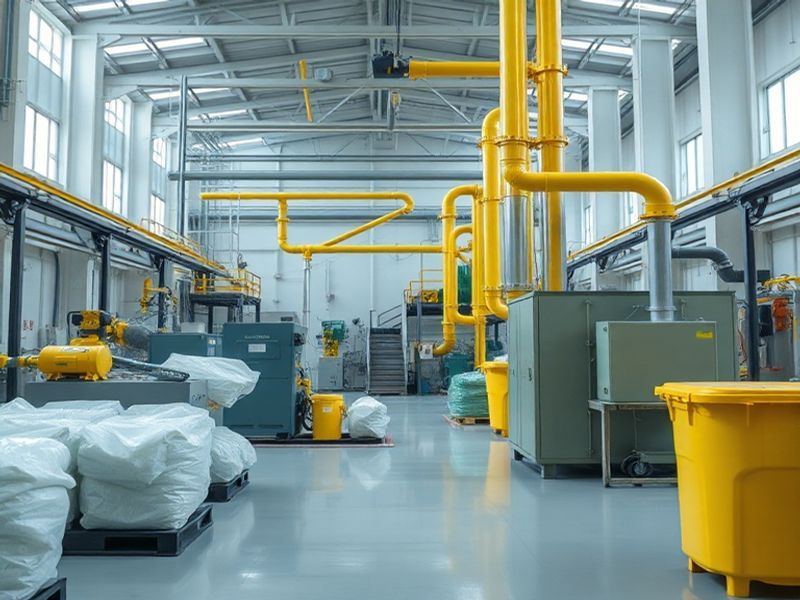
In 2025, the global plastic recycling industry is undergoing a profound transformation. Driven by technological innovation, evolving regulatory frameworks, and growing market demand for sustainable solutions, the industry is developing at an unprecedented speed. Despite facing many challenges, the prospects for the global plastic recycling market remain broad.
Global Market Growth and Investment Landscape
According to the latest market research report, the global plastic recycling market size in 2025 is estimated to be approximately $45.32 billion. It is expected that by 2032, this figure will grow to $77.81 billion, with a compound annual growth rate (CAGR) of 8.02%. This growth not only reflects the surge in demand for recycled plastics but also reflects the widespread adoption of circular economy models globally.
In terms of investment, investment in advanced recycling technologies is increasing significantly. European plastic manufacturers plan to increase their investment in chemical recycling from 2.6 billion euros in 2025 to 8 billion euros by 2030. Venture capital and private equity are also actively deploying, supporting early innovation and infrastructure construction. This diversified investment ecosystem has laid a solid foundation for the long-term development of the industry.
Key Drivers: Policy and Market
Government policy action is the core driver of industry transformation. In 2025, more and more countries and regions have implemented Extended Producer Responsibility (EPR) systems. In the United States, states like California and Colorado have passed EPR laws requiring producers to bear the financial responsibility for waste management, thereby incentivizing them to design more easily recyclable packaging.
At the same time, mandatory requirements for recycled content in the EU, Canada, and other places are also reshaping market demand. For example, the EU requires that PET bottles must contain at least 25% recycled plastic by 2025. These policies have directly created huge demand for high-quality recycled materials (Recyclates), driving the upgrade of the entire industry chain.
Challenges and Opportunities
Despite the optimistic outlook, the industry still faces severe challenges. First is the low cost and oversupply of virgin plastics. Due to capacity expansion, the price of virgin plastics is often lower than that of recycled plastics, which to some extent inhibits the enthusiasm of enterprises to use recycled materials. Second is contamination; the complex nature of mixed waste plastics makes the recycling process complex and expensive.
However, challenges also breed opportunities. With the rise of consumer environmental awareness, brands are increasingly inclined to use recycled plastics to enhance their brand image. This bottom-up market force, combined with top-down policy pressure, is forming a powerful synergy, driving the plastic recycling industry towards higher quality and sustainability.
Outlook: Towards 2030
Looking ahead, 2025 to 2030 will be a critical window period for the plastic recycling industry. With the improvement of infrastructure and technological maturity, we have reason to believe that a more efficient, transparent, and closed-loop plastic circular economy system is gradually forming. For enterprises in it, seizing this historic opportunity not only means commercial success but also responsibility and commitment to the earth.